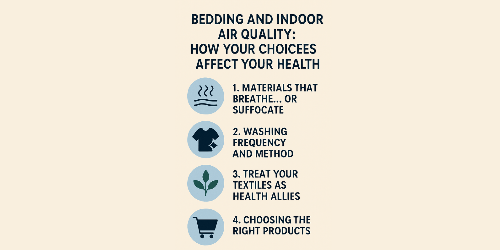
We spend nearly a third of our lives sleeping, often in closed spaces. What many don’t realize is that your choice of bedding directly impacts indoor air quality, and therefore your everyday health.
🌬️ 1. Materials that Breathe… or Suffocate
Cheap synthetic fabrics can trap humidity, heat, and allergens, creating the perfect environment for dust mites and mold.
In contrast, materials such as natural cotton, linen, or high-quality microfiber are breathable, reduce bacterial growth, and promote a healthier night’s sleep.
🧼 2. Washing Frequency and Method
Poorly maintained bedding becomes a magnet for dust, dead skin, and allergens.
To maintain clean indoor air:
- Wash your sheets every 1 to 2 weeks at 60°C if possible;
- Use a gentle, fragrance-free detergent;
- Air-dry your bedding when possible to avoid trapped moisture.
🌱 3. Treat Your Textiles as Health Allies
Many bedding products now come with hypoallergenic, antibacterial, or anti-dust mite treatments.
Certified textiles (such as OEKO-TEX® or GOTS) guarantee the absence of harmful substances, which is especially beneficial for children or people with asthma or sensitivities.
🛒 4. Choosing the Right Products
If you want to invest in bedding that protects both your health and your home environment, consider:
- Breathable pillowcases that are easy to wash regularly;
- Microfiber comforters with protective treatments, lightweight and washable;
- Dust-mite resistant mattress protectors, extending mattress life and improving air quality.
🌟 Conclusion
Choosing and maintaining quality bedding doesn’t just provide comfort—it supports the purity of the air you breathe every night.
By adopting a few simple habits and selecting the right materials, you can improve both your sleep and your overall well-being.

Laisser un commentaire